VMPEA: Seunghye Lee, NOV 16, 4-6pm

VISUAL AND MATERIAL PERSPECTIVES ON EAST ASIA

NOV 16 (Friday), 4:00-6:00, CWAC 156

Seunghye Lee

Ph.D. Candidate, University of Chicago


“The Pure Land in an Underground Space: The Digong Hall from the Southern Song Pagoda Crypt in Ningbo”

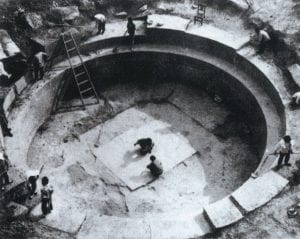
This presentation is derived from the third chapter of my Ph.D. dissertation, entitled “Art of the Enshrinement: Buddhist Reliquary Shrines in China and Korea from the tenth to fourteenth century.” This chapter focuses on an intricate reliquary self-reflexively labeled as the “Digong Hall of Tianfeng Pagoda” (Tianfengta digongdian 天封塔地宮殿) from the underground relic crypt of the Tianfeng Pagoda in Ningbo, Zhejiang Province. Dated to 1144, the Digong Hall yielded a complex material assemblage centered on a miniature pagoda that seems to have held relics and bronze images of the three Pure Land deities. The intrinsic relationship between the structure and deposit contents of the Digong Hall renders the reliquary into a framework through which we can reconstruct the perception of relics and afterlife prevalent in the Southern Song. Several questions will be addressed throughout this presentation: why make a reliquary in the shape of a worship hall standing over ground? What were the intended functions and meanings of the artifacts in the carefully designed interior of the Digong Hall? What was the underlying logic in making the Digong Hall and furnishing it with specific artifacts? How should we interpret the doubling of iconographical focus – i.e. relic installments and the Pure Land icons – in the Digong Hall? This paper attempts to answer these questions by unpacking the material assemblage of the Digong Hall and situating it in historical, cultural, and religious contexts of Southern Song Ningbo. By closely reading deposit contents against inscriptional evidence, this talk attempts to reconstruct the social and religious functions of reliquary practice in the twelfth century – a period that has been largely neglected in previous studies on Chinese relic veneration.

 Persons with a disability who believe they need assistance are requested to contact quincyngan@uchicago.edu in advance.

Professor Zeitlin, Nov 9, 4-6pm

VISUAL AND MATERIAL PERSPECTIVES ON EAST ASIA

Nov 9 (Friday), 4:00-6:00, CWAC 156

Professor Judith T. Zeitlin

East Asian Languages and Civilizations, the University of Chicago

“A Ming pipa in the Metropolitan Museum of Art: Toward a reconstruction of its literary, historical, and cultural context”

One of the treasures of the musical instrument collection at the Metropolitan Museum of Art is a richly decorated late Ming pipa made of wood, ivory, and bone. Slender and tear-shaped, the back of the instrument is honeycombed with some 120 ivory plaques carved with auspicious pictorial motifs, such as immortals, animals, and flowers. The pegbox terminates in a carved wooden bat or butterfly. On the front of the instrument is inset a small ivory spider, below which an ivory bird is carved in a rondel; an ivory-plated string holder with a four-character inscription and figural scene is glued to the wooden belly; another ivory plaque between the body and neck pictures a boy and a man holding a fish. The wooden belly is worn and has scratches around the string holder, suggesting that despite its lavish ornamentation, the pipa had been played in the past and was not merely for display.

What was this instrument? Where might it have been fashioned and who could have played it? What does its decorative program mean and why was it ornamented so lavishly? And above all what can this sort of highly wrought luxury object tell us about the representation and social practice of music in early modern China?

Nothing is known of this pipa’s provenance except that was a bequest of the American philanthropist and art collector Mary Stillman Harkness in 1950, and there has been no serious study of this instrument.

My paper attempts to situate this instrument within the literary, historical, and cultural context of early modern music, performance, and decorative objects. To interpret the cultural meanings of this enigmatic object, I will take two approaches: intrinsic and extrinsic. By intrinsic, I mean studying the decorative program, material, and design of the object itself; by extrinsic, I mean studying how such an instrument might have been treated and given meaning by others in the early modern period. In this latter pursuit, I will focus on one particular figure, Kong Shangren, the famous early Qing playwright of Peach Blossom Fan, who was a keen collector of rare antique musical instruments. My overall aim is to use this case study of the Met pipa as a way of integrating the material evidence of extant musical instruments from sixteenth- and seventeenth-century with analysis of the multi-dimensional representation of the musical instrument in the literary work of late Ming and early Qing playwrights and poets.


Persons with a disability who believe they need assistance are requested to contact quincyngan@uchicago.edu in advance.

XU PENG, Oct 26th, 4-6pm

VISUAL AND MATERIAL PERSPECTIVES ON EAST ASIA and
MUSIC HISTORY/THEORY
Oct 26th (Friday), 4:00-6:00, CWAC 156

Xu Peng
Ph.D. Candidate (the University of Chicago)

“The Courtesan Singer: Problems of Acoustics and Aesthetic Bifurcation”
This paper (in the abridged form of my dissertation chapter) addresses the courtesan’s vocal art in late Ming China (1547-1644). I contextualize aesthetic problems in a sequence of historical performances and fictional presentations of singing. Concerning the sources for styles at the courtesan’s disposal, I propose two extreme models of performance: the typical late-Ming courtesan’s solo was what I call “the midnight vocal chamber music,” rendered in a pleasing-sounding and soft voice, with no string accompaniment but the mechanical beats of clappers. Contrariwise to this courtesan tradition of singing, there was also the mountain hiker’s solo (similarly, lacking stringed instrumental accompaniment), performed and listened to in natural landscapes with rich ambient noise, especially the sound of rapid streams and waterfalls. The division of singing style, I argue, had both gendered and auditory implications. Evidence of the two styles will be assembled from the written and painted materials of the time.

Persons with a disability who believe they need assistance are requested to contact quincyngan@uchicago.edu in advance.

Professor Robert M Oppenheim, Oct 18th (Thursday), 4:00-6:00, CWAC 156

VISUAL AND MATERIAL PERSPECTIVES ON EAST AISA

Oct 18th (Thursday), 4:00-6:00, CWAC 156

Professor Robert M Oppenheim  (Associate Professor, Director of Center for East Asian Studies, University of Texas at Austin)


“Sokkuram’s Interior Landscapes: Visualizing Korea from Chicago, Circa 1911”

The focus of this paper is on some hidden histories of a single and quite famous Korean monument, the Buddhist cave-temple Sokkuram, centering on a moment between its arrival at wide public notice around 1907 and its first reconstruction beginning in 1913—a moment that also coincides with the beginning of formal colonial rule in Korea.  Using unpublished sources, visualizations produced by or through the University of Chicago anthropologist Frederick Starr, I examine two appropriations of Sokkuram’s materiality that coincide with two enactments of writing in relation to it.  In one, Sokkuram’s painted surfaces (long since bleached away) and their spatial enclosure within the grotto formatted a genealogy of heterogeneous consideration of Korean racial and religious pasts.  In the other, more literal inscriptive practices of writing on the temple—the signatures of school groups and other visitors—can be read as politically significant “words in the world” through close consideration of their timing and placement, notwithstanding the paucity of content of the texts themselves.  Overall, this paper argues for a need to understand the historical process of landscape not merely as the mapping and remapping of meanings onto lieux de memoire and historiographically-significant sites, as such processes are commonly read in Korean studies, but also in terms of stronger forms of heterology.  Sokkuram at the instance of its modern reemergence was more than a site to which meanings were attached; it was a wonder that captivated and gathered a swirl of meanings to itself.  Thus, its post-1913 colonial reappropriation, whatever else may be said about it, also had the local, contingent quality of a production of disenchantment.


Persons with a disability who believe they need assistance are requested to contact quincyngan@uchicago.edu  in advance.


Kris Imants Ercums, Oct 5th, 3:30-4:30, CWAC 156

VISUAL AND MATERIAL PERSPECTIVES ON EAST AISA
OCT 5th, 3:30-5:30pm, CWAC 156

Kris Imants Ercums
Curator of Global Contemporary and Asian Art
Spencer Museum of Art, University of Kansas
Ph.D. candidate
Department of Art History
University of Chicago

“The Battle for Art: Modeling the National Exhibition in Republican-era China, 1910-1937”
Efforts to strengthen and promote the idea of a contemporary “Chinese art world” (Zhongguo yishu jie) in the first half of the twentieth century were manifest prominently in the organization of large-scale “national art exhibition” (guanquo meishu zhanlanhui). However, the question remained: “who’s art world was it?” This paper examines the development of the national exhibition model through four key art events: The Nanyang Industrial Exposition (1910); The First Pegasus Society Exhibition (1919); The First National Exhibition of Art (1929) and the NOVA exhibition (Xin Yishu Zhan) organized by the Chinese Independent Association of Artists (1935). These exhibitions demonstrate the competitive atmosphere that emerged between “official” government-sponsored exhibitions and alternate “unofficial” artist-lead exhibitions. Through an analysis of the contextual development of these and other exhibitive models; curatorial and display strategies; this paper further illuminates the complex and varied discourse of modern art that existed in China prior to the advent of the Sino-Japanese War in 1937.

VMPEA: May 25, Lillian Tseng

Lillian Tseng

Associate Professor of East Asian Art & Archaeology

Institute for the Study of the Ancient World

New York University

Absence and Presence: The Great Wall in Chinese Art

Built and rebuilt many times since the third century BCE, the Great Wall has remained culturally significant and monumental in China. However, it did not become an object of pictorial representation in China until the twentieth century. Examining both modern and pre-modern examples, this paper argues that it is from the interplay of absence and presence in various cross-cultural contexts that we may better grasp the role of the Great Wall in Chinese Art.

Friday, May 25, 4-6 p.m.  CWAC 153

VMPEA: May 11, Satoko Shimazaki

Shades of Jealousy: Gendered Ghosts and Gendered Actors
in Early Modern Kabuki

Satoko Shimazaki

Assistant Professor
University of Colorado, Boulder


The female ghost of Oiwa in Tsuruya Nanboku’s canonical kabuki play Ghost Stories at Yotsuya (Tōkaidō Yotsuya kaidan, 1825) was constructed as a sort of visual montage of images deeply rooted in gendered religious and cultural discourses. While the performance of female ghosts was the provenance of female-role actors or onnagata, nineteenth century kabuki reinvented the role for male-role actors. Focusing on Ghost Stories at Yotsuya, my talk will explore the gendered resonances behind the construction of ghosts on the early modern kabuki stage and the meaning of the actors’ body in kabuki. I will propose a revision of earlier critical discourse on the meaning of the body of the kabuki actor, especially the gender make-up of actors in the kabuki theater, which has centered on the discussion of female-role actors. I move away from the actor and his body as the prime site for interpretation, focusing instead on kabuki theater as an ideological structure and a cultural system that manipulated the viewer so that the real life gender and sex of the actor were made irrelevant.

Friday, May 11, 4-6 p.m.  CWAC 153


VMPEA: April 20, Dai Xiaoyun

Dai Xiaoyun

Associate Research Fellow, Beijing Luxun Museum
Visiting Scholar of Fairbank Center for Chinese Studies, Harvard University

Shuilu Paintings (水陆画) and the Ritual Text  of “Tiandi mingyang shuilu yiwen (天地冥阳水陆仪文)

The talk will be given in Chinese.    

Friday, April 20, 4-6 p.m.  CWAC 153


Satoko Shimazaki’s Article

Shimazaki, The End of the World (Monumenta)

Spring Quarter Schedule

April  20 Fri.  Dai Xiaoyun (Associate Research Fellow, China Central Academy of Fine Arts) : “Shui lu Paintings of Buddhism”

May 11 Fri.  Satoko Shimazaki (Assistant Professor, University of Colorado, Boulder) : TBD

May 25 Fri.  Lillian Tseng (Associate Professor, New York University) : TBD

June 1 Fri.   Mia Liu (Ph.D. candidate, The University of Chicago) “The Legend of Tianyun Mountain: Xie Jin’s Literati Recluse”